
Restore Leg Blood Flow, Walk Pain-Free—No Open Surgery Needed
Minimally invasive angioplasty clears leg artery blockages, boosting circulation fast. Outpatient. Limb-saving.
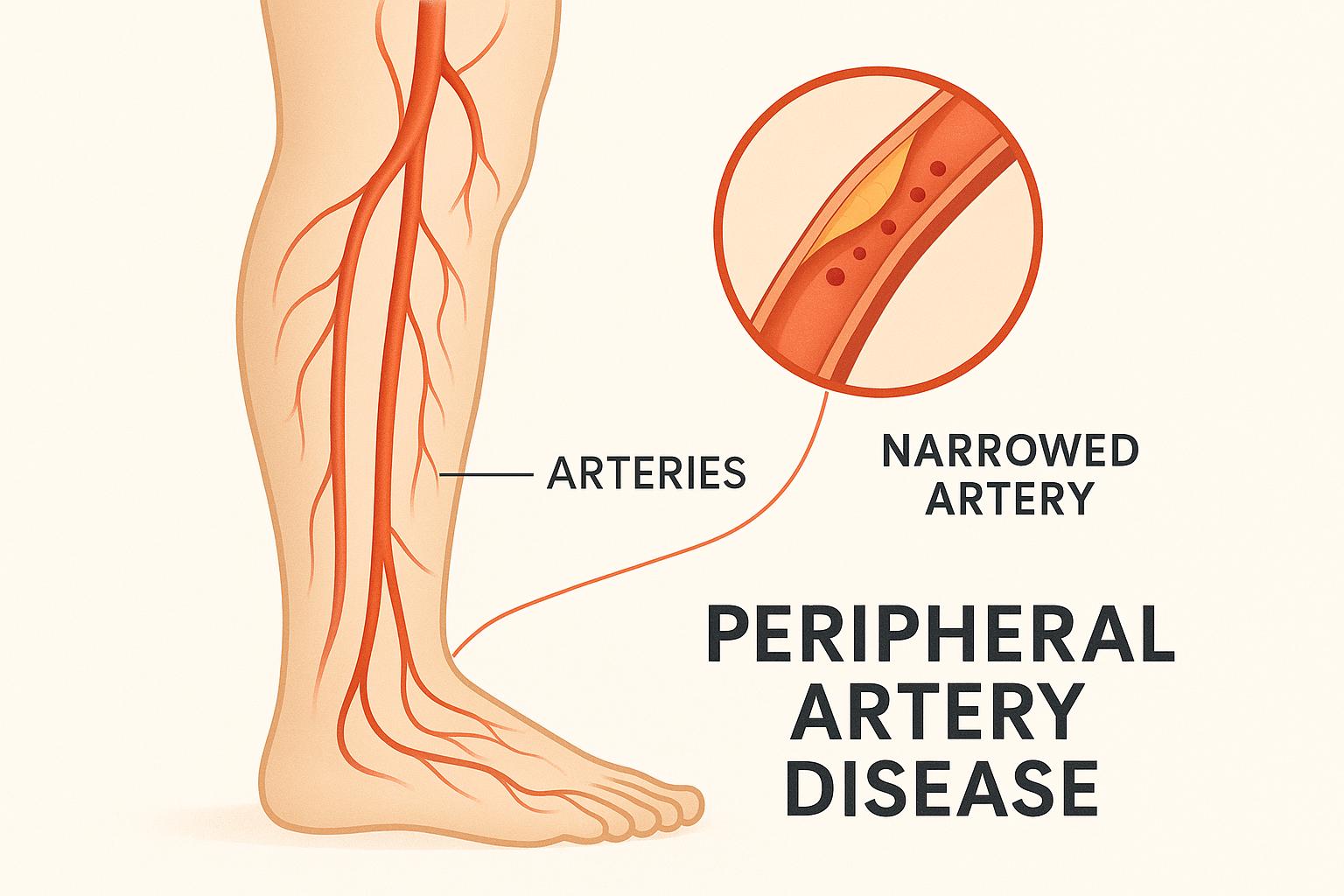
What is PAD?
Peripheral Artery Disease (PAD) occurs when plaque buildup narrows leg arteries, starving muscles of oxygen-rich blood. Common in smokers, diabetics, and those over 50. Early treatment like angioplasty restores flow in 90%+ of cases, slashing heart attack risk too.
Key Stat: Affects 8-12 million Americans; symptoms often mistaken for “aging.”
Ready to Walk Without Pain?
Your Minimally Invasive PAD Treatment Options
Balloon
Angioplasty
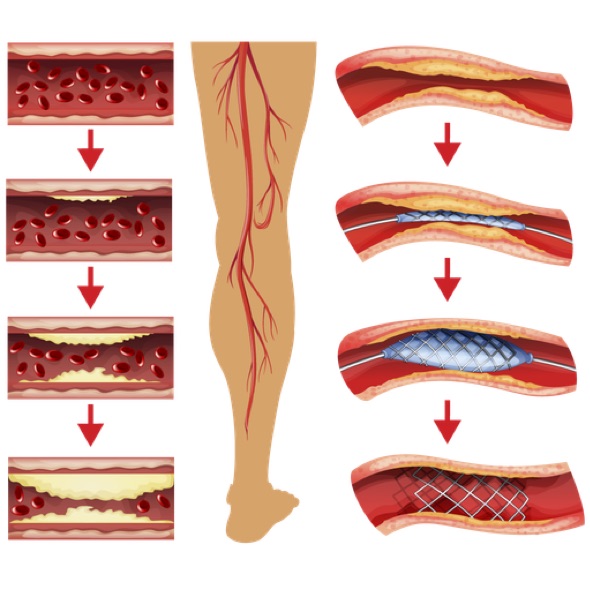
How it works: Tiny catheter with deflated balloon threads to blockage. Balloon inflates to crack plaque and widen artery.
Best for: Short, simple blockages in leg arteries.
Benefits: Quick (under 2 hours), immediate flow improvement, home same day.
95% initial success rate.
Stent
Placement
How it works: After ballooning, a mesh stent props artery permanently open like scaffolding. Drug-eluting stents prevent re-narrowing.
Best for: Longer or elastic blockages that collapse after angioplasty alone.
Benefits: Durable opening (5+ years), reduces repeat procedures 70%.
Gold standard for most PAD cases.
Laser
Atherectomy
How it works: Excimer laser catheter vaporizes plaque buildup from artery walls with intense light energy—no cutting required.
Best for: Calcified, hard plaque that resists balloons/stents.
Benefits: Removes buildup precisely, smooths artery surface, pairs well with stents.
Ideal for complex, diabetic PAD.
All three done via tiny groin or wrist access. Local anesthesia only. Back to routine in days, not weeks.
PAD Procedure Overview
- Access Site – Local numbing at groin or wrist
- Guide Wire – X-ray navigates past blockages
- Balloon & Stent – Opens artery, props it wide open
- Immediate Flow – Walk out same day, relief in hours
or
Your PAD Warning Signs
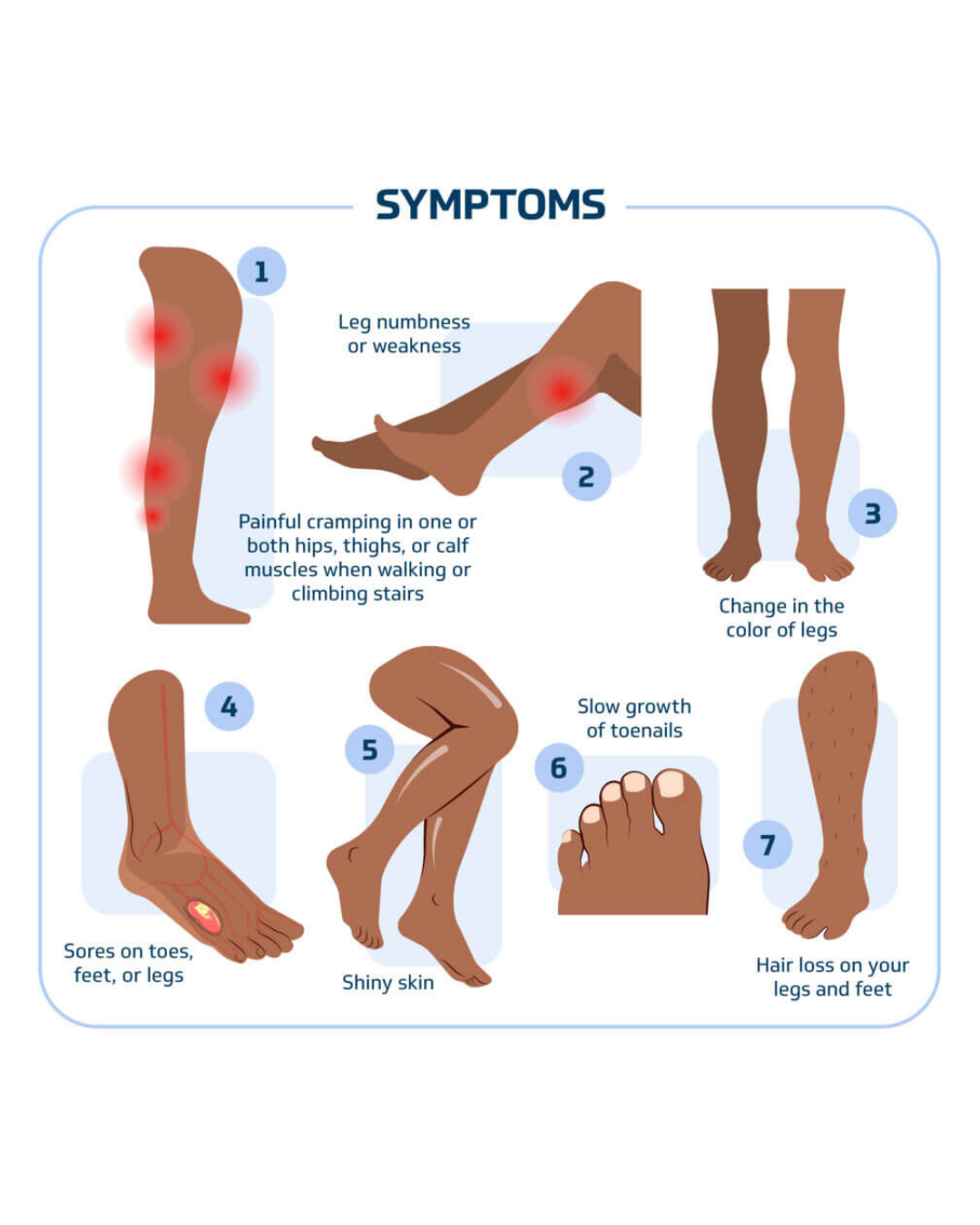
- Leg cramping while walking (stops with rest)
- Cold/numb feet or shiny skin
- Slow-healing sores or hair loss on legs
- Burning calf pain at night
- Weak pulses in feet/ankles
PAD vs. Other Approaches
Angioplasty/
Stent
- Recovery: 1-3 days
- Invasiveness: Catheter-only
- Success Rate: 90%+
Bypass
Surgery
- Recovery: 4-6 weeks
- Invasiveness: Major incision
- Success Rate: 85%
Medications
Alone
- Recovery: Ongoing
- Invasiveness: Pills/exercise
- Success Rate: 50%-60%
Amputation
- Recovery: Permanent
- Invasiveness: Last resort
- Success Rate: N/A
Frequently Asked Questions
Does PAD mean I'll lose my leg?
No—90% avoid amputation with early intervention like stents.
How fast does treatment work?
Pain relief often begins same day; walking distance improves in weeks
Can exercise fix PAD?
Helps mildly (supervised physical therapy doubles distance), but blockages need clearing.
Smoking impact?
Diabetics?
All three work well; laser excels with hard diabetic plaque.
Don’t Wait—Restore Your Mobility
1 in 20 Americans over 60 are affected. Leg pain signals urgent vascular disease.
Want More Information? Or to Find Out If You’re a Candidate? Submit the Form Below and We’ll Give You a Call Back.
PAD is More Serious Than Most People Realize. The Sooner You Act, the Better Your Options. We’re Here When You’re Ready.